
Volume 2, No. 3
EJ Moran's essay about her late sister's literal and figurative demons has us thinking about how the suppression of our pain only intensifies its damage to our psyches and our bodies.

Infinite Hope
This essay was previously published the June 2024 issue of Otherwise Engaged.
By EJ Moran
“We must accept finite disappointment, but never lose infinite hope.” Martin Luther King, Jr.
Whenshe was little, my sister Jilly frequently had bad dreams. I’m not talking about those troubling childhood dreams that dissolve at dawn. No, these were steeped-in-creep, horrific nightmares with a pulse all of their own, vibrating through the night with a cadence of terror. There were nights when Jilly would wake up moaning, thrashing about as if she was battling some dark force. And maybe she was. I have to admit, I sometimes worried there really was some malevolent presence that could jump from Jilly’s nightmares into my own, its tentacles digging deep into my psyche, feeding off of my own fears.
I once asked Jilly about them, after a particularly bad night, but she was reluctant to talk about them. Although we were about as close as a brother and sister can be at that age, we abided by the unspoken boundary of teenagers. When she was finally willing to open up about them, she seemed relieved to share her fears. She spoke in a low tone of voice, as if she was afraid of being overheard.
“Okay,” Jilly prefaced, “but you need to promise that you’ll keep whatever I tell you between us.” Which left me wondering, who in the world would I tell? Nonetheless, I assured her that whatever she confided would remain our little secret.
“So, last night,” Jilly began, “I was in bed but hadn’t fallen asleep yet. I’m facing the wall, you know, the one with the David Bowie poster that I love?”
I nodded, knowing that the multi-talented, enigmatic singer was her teenage crush.
“I turned around,” Jilly continued, “and right in front of me . . .I mean, hovering over me . . . was this man, except it really wasn’t a man. I mean, it was like an evil presence that was just staring right at me.”
Jilly started to choke up, then fell silent for a moment. I waited, literally on pins and needles.
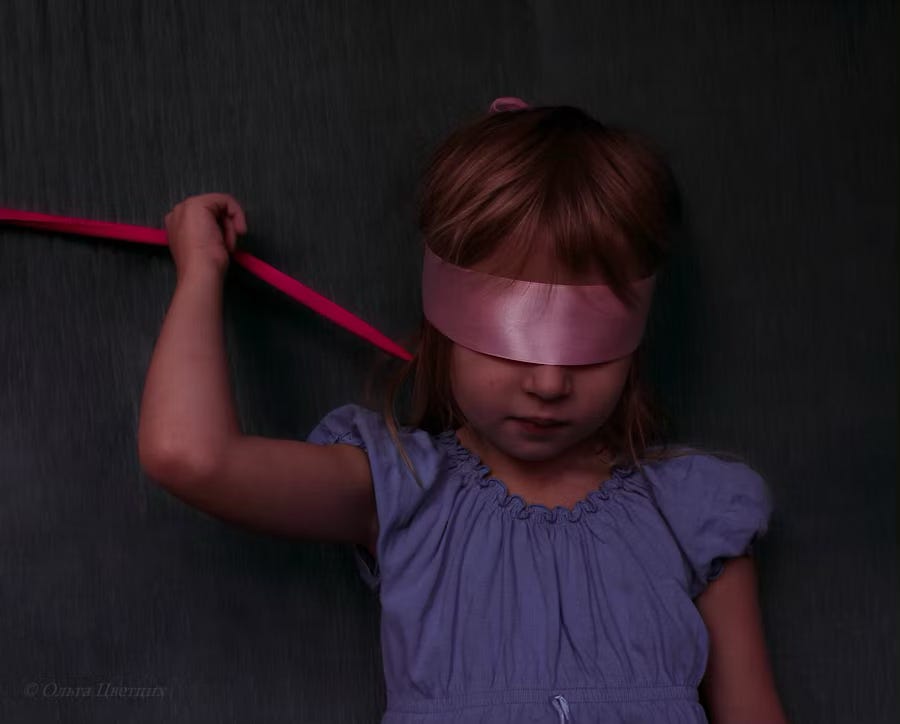
“Then, I . . . felt this pressure on my chest. I was paralyzed with fear, like I was terrified and wanted to escape, but I wasn’t able to move.”
“What did this . . . whatever it was, look like?” I asked.
Not that I really wanted to know.
“It’s so hard to describe. I actually get scared just thinking about it. But do you remember that dream sequence in The Exorcist, when Father Karras sees that horrible face?”
“The one that flashes on screen for like, just a second?” I did indeed remember. I thought it was the most frightening scene of the movie.
Jilly seemed to freeze up then, as did the conversation.
I have to admit, my whole body felt like dead weight. I still wasn’t sure if this was a terrorizing nightmare, or whether it could possibly have happened the way she thought, so I suggested hopefully, “Do you think it was a dream, like maybe you fell asleep and didn’t realize . . . ?”
She stayed silent for a long while, and as I finally got up to leave her room, I thought I heard her whisper, “I wish”.
I was to learn that this night terror was not a one-and-done event, but was a recurring situation. Similar scenario, same terrifying presence that would lock eyes with her. I knew when she’d had a bad night by the dark circles under her eyes, and that thousand mile stare the next morning.
Our mother was always looking for ways to make things better for us kids. In our case, she had gone over and above ever since our father had passed away several years prior. When Mom first asked Jilly about her nightmares—she would hear her stirring at night, then quietly sobbing—my sister would always pretend to have forgotten. So Mom, among other things, painted her a wooden sign to hang in her room that read, “No Monsters Allowed!”, and made her an intricate “dream catcher” to hang over her bed. Mom hoped that these would somehow be soothing and help chase away Jilly’s night terrors. But, as time wore on, the only thing my sister was chasing was her next high. A means of blunting those bad times by blurring reality ever so softly.
For me, it was another worry in my growing list of concerns about Jilly, mainly that she would make some bad decisions after having one too many, such as getting into her car while impaired and hurting herself, or perhaps worse, someone else.
Whenever I tried to approach the subject of her drinking, Jilly would say the alcohol filled her with warmth, soothed her anxieties and repelled her night terrors. She described it as floating in the ocean on her back, feeling the sun on her face while riding the waves.
“But when you come down from the high, you feel like you’re caught up in a vicious riptide,” she explained. “And that’s when you reach for the nearest life jacket.”
I could see that she was justifying her choices. Jilly seemed to believe nothing that felt this good could possibly be all that bad for her. The trouble was, while she believed she had things under control, it was in fact starting to control her.
Even as a child, my sister considered herself “fatally unique”, someone for whom the ordinary cures couldn’t possibly help her. I thought this was nothing more than a cop-out, an excuse for continuing down this dark road, where people convince themselves there’s nothing to be done for their tortured souls other than indulging in whatever eases their pain.
Southern Comfort with Coke was Jilly’s current go-to, which she’d discovered as a freshman at Ole Miss. After sloshing her way through her first semester and a half, she was academically dismissed. She always remained loyal, however, to that particular drink.
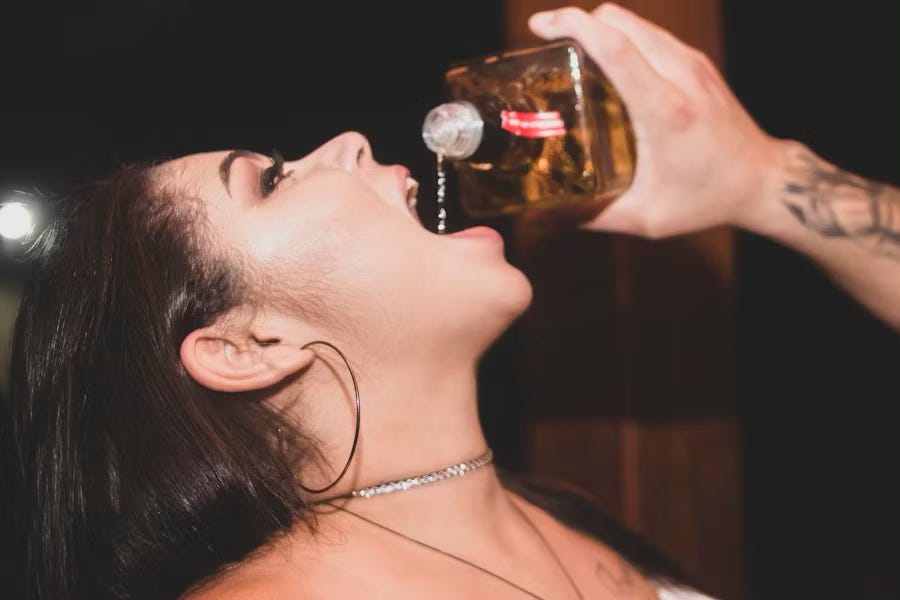
When she was in her 20s, Jilly would get together with several women once a month, former friends from an AA group that had gone completely off the grid. They called themselves “The Badass Club,” and were young women who drank their way through some pretty rough times. They would meet at the local diner, ostensibly as a support group to keep themselves on the straight and narrow. Unfortunately, they had so many laughs reminiscing about the good old days, it would sometimes spur another night of drinking, with repartee such as . . .
“What about that time you danced your way off the boat and into the lake?”
“At least I didn’t end up with any broken bones.”
“But for the grace of God!”
And hilarity ensued. You get the idea.
Ironic? Absolutely. Smart? Let’s just say it left me wondering, could they possibly sue themselves for stupidity? I’ve never been judgmental, because that’s never been my thing, but I mean, these were educated women, some of whom had families, children, responsible jobs. And yet, there they were, yukking it up about some of the more cringeworthy moments of their lives and, sometimes recreating them. But, I’d soon learned there was nothing stupid about it.
I’d come to find out that there are some people for whom the drink gets a death grip on, choking out their youth, strength and judgment, until there’s nothing left to fight with. They surrender themselves to the moment and learn to live with their regrets.
Shortly after returning from her abbreviated college career, Jilly entered the workforce, where she had the world at her feet. She landed a cushy, well-paying job in downtown Manhattan, as a coordinator for a sales team. Comprised mostly of men, they flocked to her like moths to a flame. Of course, it didn’t hurt that she was tall, blonde and quite pretty (in my biased opinion). In fact, the first time I saw The Birth of Venus by Botticelli, it reminded me of her, except Jilly’s eyes were the color of a summer sky which crystallized in the sunlight.
The after-hours party atmosphere at her job fit perfectly into Jilly’s lifestyle, being a veteran partier herself. Although you wouldn’t know it to look at her, she could drink most people under the table. In addition to her natural beauty, she was blessed with a quick wit and a sharp mind, all of which garnered her a steady entourage of male admirers.
Jilly’s suitors came and went through the years. Frankly, most were only temporary and, truth be told, not all that compatible. But there was one particular admirer who seemed to be in it for the long game, and who Jilly felt unable to turn down, mostly because he refused to take no for an answer. And, for a while, their life together was one big party … until it wasn’t.
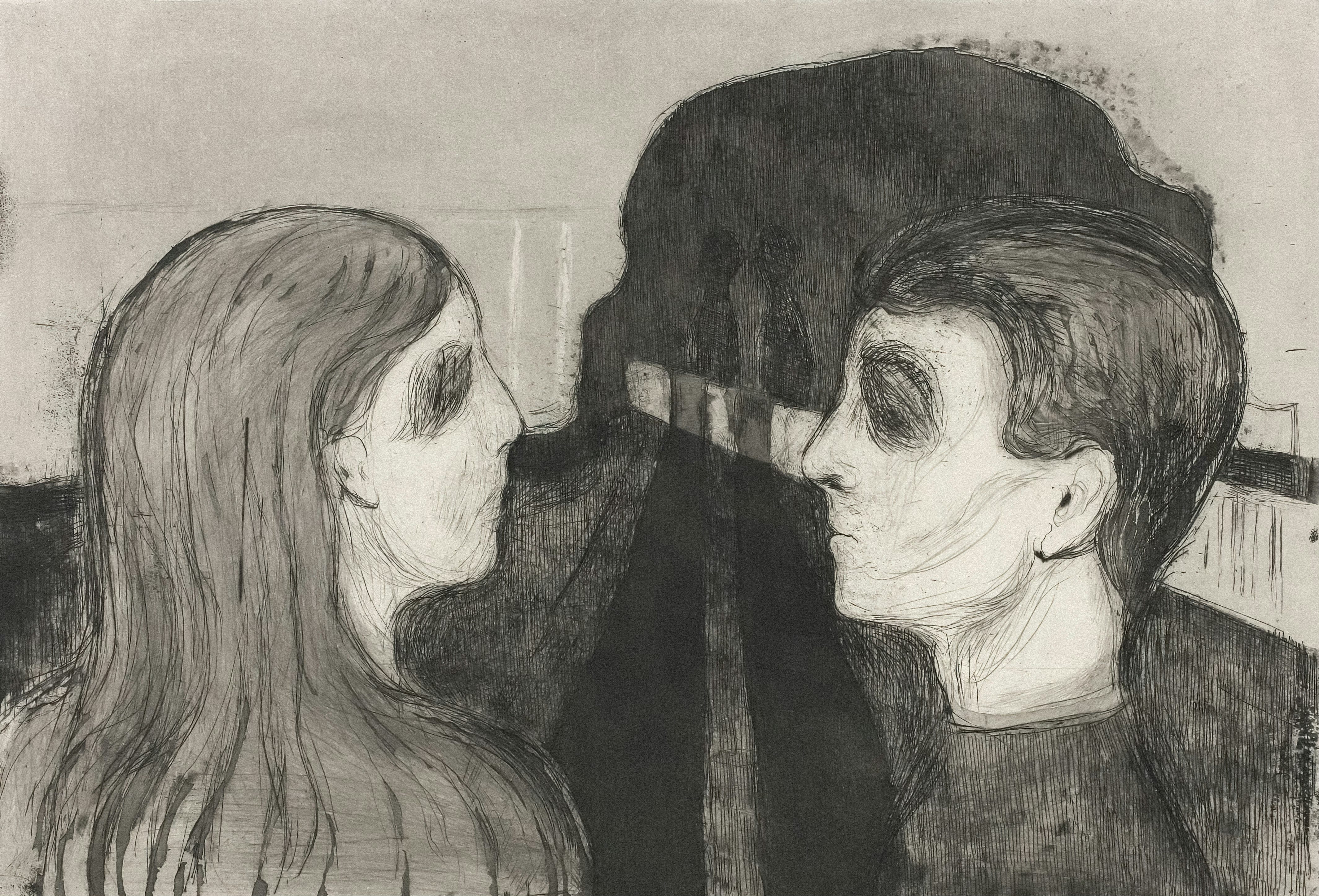
Jilly remembered the moment she’d decided to give Prescott a chance, although physically, he wasn’t her usual taste in men. He was a little stocky, and rough around the edges, but did have intense brown eyes and an engaging smile. One Friday night after work, Jilly and some co-workers were at a bar in Queens, NY, one of their usual hangouts. The liquor was flowing freely, and the bad jokes even moreso. Jilly had known for some time that Prescott was more than a passing admirer. She could tell from the way his eyes followed her whenever she walked past, how he always seemed to be nearby at work, or how he would leave her favorite coffee on her desk in the morning. On this particular evening, she noticed him staring at her intently, all the while inching closer to her. Then, when he was alongside her, he bent down, slipped off one of her high heeled shoes, filled it with some Veuve Clicquot champagne and downed the bubbly.
Jilly was surprised, and pleasantly intrigued. Prescott made a grand entrance into her life that evening, no longer waiting in the wings. From that point on he was front and center. They got a table together and talked late into the night. At some point, Jilly couldn’t recall exactly when, Prescott confessed his years-long crush on her and, by the end of the evening, had invited Jilly to move into his house, and his life, where she could live rent free. While Jilly wasn’t usually so impulsive, she did see Prescott’s offer as something she’d subconsciously been seeking for a while - a safety net of sorts. If only she’d paid less attention to the giddy feeling of a new future, rather than the dim, quiet voice that warned, “Get Out Now!”
Maybe this is how it happens when two unsuspecting people mistakenly believe they can share a normal life together and live as normal couples do. They seemed unaware that at some point in time, normal can morph into something twisted. A coiled, venomous snake lurking in the shadows, waiting for the right moment to strike. And when it did, things began to go sideways.
When he was born, Prescott’s mother insisted on naming him that, believing she was bestowing upon him a bit of class. Sadly, as those who knew him well would agree, Prescott had plenty of class; unfortunately, it was all low. He was rumored to have seen Animal House over a hundred times, his role model being Bluto, the character played by John Belushi. You get the picture.
Prescott had grown up in a family of four with his sister and parents, although there were often extended family members who lived with them on and off. Sometimes it was due to a downturn of luck, while other times because of job opportunities. Prescott’s was the type of family that often communicated by yelling at high volume, often hurling insults or accusations at one another. When things would quiet down, family members might retreat into their respective corners, to nurse their wounds and, perhaps, conjure up future zingers to throw around. Oftentimes what started out as playful family banter could quickly turn vicious, when visiting family members ran out of money to contribute, or Prescott’s parents were simply tired of having them underfoot. Unsuspecting prey could suddenly find themselves the recipient of vile accusations, which flew back and forth like hollow point bullets. I guess you could say it was just a way of life, one that often left family members wounded and defenseless. But for Prescott, it was the only way of life he knew.
Prescott, Jilly came to learn, was an avid hunter who’d been raised to prey upon perceived weaknesses. By all accounts, hunters thrive on the thrill of the chase, the adrenaline rush that comes from sighting their target, then going in for the kill. And as they say, nature loads the gun, nurture pulls the trigger . . . and Prescott had one trigger-happy finger. Jilly was more of an animal lover, but realized every relationship probably had some degree of imbalance. However, after living with Prescott for a while, she began to notice cracks in the facade of their normalcy.
In the beginning, they were trying to navigate the simple intricacies of their lives together. The good times were good, and Jilly loved feeling pampered. One of her favorite times of day was early evening, when they cuddled up on the couch with a soft blanket, while the aroma of dinner wafted through the house as she sipped her favorite whiskey. Jilly told me that at times such as this, she felt so cozy, so protected. After dinner, she and Prescott might talk for hours or just sit companionably while watching a movie. One evening, as Jilly was enjoying a glass of wine and gazing outside as the snow fell quietly, Prescott handed her a velvet gift box with a gold bracelet inside. It was engraved with an inscription that read, “Grow old along with me, the best is yet to be.’‘

It was one of Jilly’s favorite memories, and it was times like this that she felt so content in her life with Prescott.
But, as the years passed, Jilly began to realize that the life she’d come to enjoy came with expectations that had become burdensome, weighing so heavily on her that, at times, she felt she could barely breathe. It wasn’t just the intrusive questions from Prescott about her daily goings-on. No, it was much more than that. Jilly began feeling as though she was under constant surveillance with nowhere to hide. It wasn’t just the security cameras Prescott had set up at every corner of the house, ostensibly to ward off intruders. There were the clicking sounds on her phone calls, which led her to suspect they were being recorded. At first, Jilly chalked her suspicions up to paranoia, but then thought, just because you’re paranoid doesn’t mean people aren’t following you, right? No, something was off. Prescott always seemed to know who she spoke to on the phone and sometimes hinted about details of the conversation. She was sure something was wrong but kept her suspicions to herself.
But then the real problems began, the kind that knock you to the ground, both figuratively and literally. And that type of pain shouldn’t go unanswered, despite any convoluted logic or convenient amnesia you may force upon yourself. And wounds like these never really heal.
I remember the first time I noticed something different about my sister. We hadn’t seen each other in a couple of months, which wasn’t unheard of, except that my birthday had come and gone during that time, something she generally wouldn’t miss. No, we weren’t children any longer, but we were still committed to celebrating little milestones together. I suppose it was our way of ensuring that we regularly kept in touch.
One night when Prescott was off deer hunting for the weekend, Jilly and I decided to have a cookout on her backyard fire pit. The air was crisp with a hint of fall, and we had decided to roast hotdogs and marshmallows, followed by spiced apple cider, still simmering in the slow cooker. The aroma of those spices filled the room and spilled out through the open window, a pleasant sign of autumn.
Jilly seemed preoccupied, although that wasn’t what concerned me. What had me worried was the hairline scar above the left corner of her mouth, something she’d tried to mask with makeup. Outside, I’d hardly noticed it, but once inside the house it was hard to miss, despite her attempt to cover it up. Which meant it was decision time. Do I ask her about the scar, or just pretend not to notice? Much as I wanted to pursue the former, I just couldn’t bring myself to do it. My rationale was based on the obvious: Jilly saw me looking, knew that I’d seen it, and if she wanted to talk about it, she would.
I also realized that, notwithstanding Prescott’s frequent hunting trips, Jilly was at a point in their relationship where she must have been feeling trapped, almost as if she was the prey in his crosshairs. She had given up her career shortly after taking up residence with him, and now perhaps felt like there was no escaping. I wondered if the thought of freedom had danced out of her reach like a whirling ballerina.
Months later, when I could no longer hold back, I made arrangements to meet Jilly at our mother’s home, away from any prying eyes. When I broached the subject of my suspicions, the usual sparkle in her eyes dimmed, and instead, filled with sadness.
“I need to know what’s been going on, Jilly,” I implored. “I’m really worried about you. And please, don’t pretend there aren’t problems between you and Prescott because I know there are. I’m your brother, I know you. In some ways probably better than you know yourself. It’s time to talk about whatever the issues are, and to do something about them.”
She looked at me for a beat, as if she were weighing the consequences of her answer. And then . . .
“Brent . . . Okay, but before we get started you need to know it’s not as bad as you may think. We’ve had our moments, yes, but it’s not always Prescott’s fault. I can be antagonistic at times. Also, I don’t want you to be involved. If he knows I’m talking to you, it will only make things worse. Please don’t worry about me. I can handle my own life.”
It seemed that my sister’s old night terrors had now devolved into day terrors, and that the only remedy for that was her Southern Comfort. Except that now, it seemed it no longer fully eased the pain, but rather, became entwined within the roots of her problems. It was plain—at least for me—to see that Prescott was no longer her safety net. It appeared that he had only served to exacerbate her problems, which kept her continually off balance. When I asked Jilly why she hadn’t confided in me before, she said it was because she didn’t want her regrets or battles to be mine. Worse still, she was more afraid to leave Prescott than to stay with him, and of potential repercussions should he find out that she had confided in me or our mother.

All I could really do was offer understanding and the promise of refuge should Jilly choose to leave him. I was hoping that this meeting would bring us closer. Instead, a deepening fissure began that day, which pushed us further apart. I wondered, should I have been more adamant, more forceful about her safety? Demanded she stop drinking, leave Prescott, and live with me until things calmed down? Until he got help? Or did Jilly think that this was her destiny?
I now found myself paralyzed by indecision. As much as I’d hoped things would get better for her, and that Prescott would get the help he obviously needed, I knew that I was kidding myself. I’ve learned through the years that angry people will always find things to be angry about. And maybe that’s their addiction.
The next development with Jilly turned out to be a dire one when Prescott called out of the blue, begging me to intervene in their situation.
“Please, Brent, you’ve got to help me out—help Jilly out.” he began.
My first thought? Prescott went too far and things got out of hand. I wasn’t sure how to respond. We hadn’t talked in what seemed like several years, and frankly, I’d lost all respect for him. But invoking Jilly’s name got my attention, so I couldn’t go with my first instinct, which was to slam down the phone.
“What’s going on, Pres? What the hell is going on?”
“She’s been coughing up blood. It’s been going on for a while, and it’s gotten worse since early this morning. She refuses to see a doctor. I mean, it’s like she has a death wish or something.”
Despite my dislike of Prescott, I actually found myself feeling sorry for him. His fear was palpable, he sounded like a helpless child, and his suggestion about Jilly’s death wish touched a nerve, though what I feared for her differed. I believe she felt immortal, as if she could stare down death and win. The poor choices, the many left turns she had made along the way, were what brought her to the point she was at now. I remembered during some of her darker moments asking myself if Jilly deliberately followed a self-destructive path, perhaps as a personal challenge? Whatever it was I had little time to reflect. The situation at hand was critical.
“Why haven’t you just forced her to see someone?”
But even as I asked, I already knew the answer: Jilly could be incredibly stubborn. According to Prescott, she had been unwell for months, experiencing both pain and bouts of bleeding. But rather than seek medical attention, she’d self-diagnosed herself with cancer. She was convinced that if her time had come, she didn’t want to die in some cold, sterile hospital room.
After convincing Prescott to call 911, I rushed to their home, where emergency personnel worked frantically to stem the bleeding and keep Jilly conscious before transporting her. I found it ironic that, in the end, the way she finally left Prescott was by ambulance.
Once at the hospital, she looked like a shell of her former self, a fading beauty ravaged by age and drink, and perhaps by fear of coming so close to the end. Her face was as pale as her pillow, her limbs thin and fragile as twigs. Because I was her health proxy, the doctor painted a grim picture—Jilly had a very slim chance of survival.
“Her liver’s badly damaged,” I was told. “On top of that she has esophageal varices and apparently has been bleeding for days, if not longer. They can usually be controlled, but at this stage … she’s lost so much blood, I’m not sure she would survive the surgery. She could bleed to death on the table …”
The attending doctor was being blunt, perhaps sensing there was no time for diplomacy.
“So, what do you suggest? I mean, where do we go from here?”
My voice sounded hollow, so laced with desperation that I barely recognized it.
“My best advice? Hospice.”
I couldn’t afford to let the numbing sadness paralyze me, because Jilly didn’t have the luxury of time right now. I ignored Prescott, who was hovering outside the hospital room, looking for all the world like a man who’d just realized that he was losing his best friend.
And I suppose he was.
And then, just as I could never talk to Jilly about those dark days she endured, I was much too cowardly to admit to her that her death was imminent. I was suffocating at the very thought of it, and so I offered her hope, because really, that’s all I had left to offer.
“Jilly,” I said, leaning over her bed, “the doc says you don’t have cancer. You have varices, which are blood vessels that have burst. Usually, they can be treated with surgery.”
And there it was, that small vestige of hope, something for Jilly to grab onto. And that’s when she began bargaining with God for another chance. I was reminded of an old movie I’d seen called The End, when Burt Reynolds promises God that he’d change his life in order to extend it. Except in the movie, Burt rides out a wave to shore, already backtracking on his promises. Such was not the case with Jilly. She became smaller and weaker yet still held onto the impossible hope that she was not too late to change her situation. And after a couple of days, as I stayed by her bedside, I saw her lose her grip on that hope. Her eyes gradually dimmed as the light began to fade, then slowly closed for the last time.

The tragedy of it was that, instead of fighting, Jilly had simply given in to her real soulmate, her lifelong addiction. Could I have saved her? Been more forceful when I first noticed things were getting out of control? Maybe. And maybe I could have isolated her from Prescott, as well. But deep down, I knew that I could never have broken that bond of loyalty she had with her past. Not even in the end.
And these are the regrets that I live with, the doubts that haunt my dreams and awaken me with a jolt. But in my weakest moments, I try to remember the words of David Bowie that Jilly loved:
“I don’t know where I’m going from here, but I promise it won’t be boring.”
And boring she wasn’t.
About the Author
EJ Moran began writing several years ago, and has since published several short fictional stories in various online magazines. She favors short stories by O’Henry and JD Salinger, but has many interests in varied genres. Her goal is to one day publish a book of my short stories. In her free time, she enjoys writing, swimming, cooking, and mostly spending time with her family. She lives and works in the Northern New Jersey, USA area.
If you’d like to submit your own work, please take a look at our Submission Guidelines.
 | A guest post by
|